

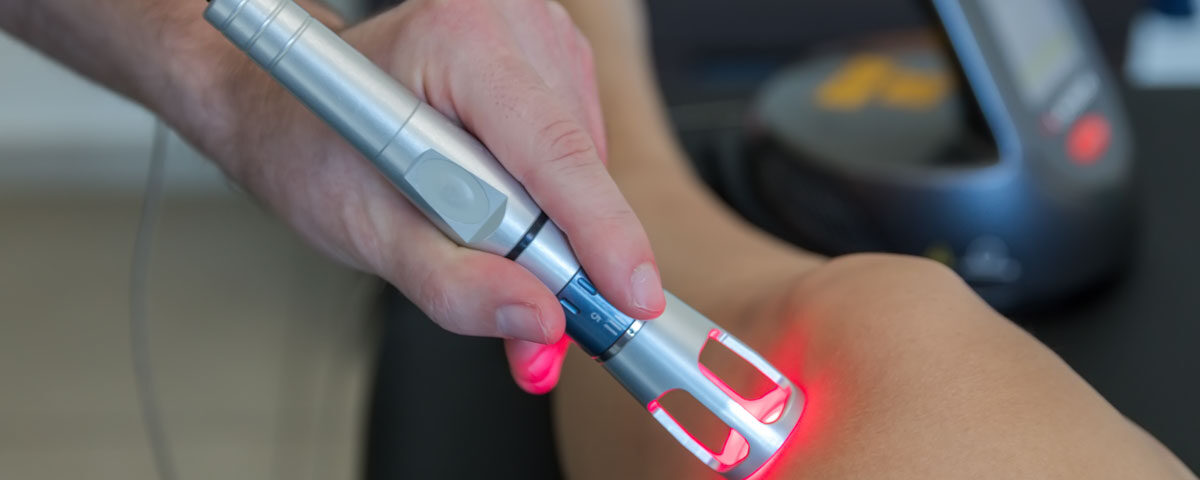
Knee osteoarthritis affects more than 32 million Americans, and for most of them the path forward has meant a cycle of pain medications, cortisone injections, and — eventually — the operating room. That framework is being challenged. Class IV laser therapy (photobiomodulation) is producing documented, reproducible improvements in knee pain, joint inflammation, and functional mobility that are changing how clinicians approach this condition — and changing what patients are told is possible.
The mechanism is not analgesic in the conventional sense. When therapeutic light at 810–980 nm penetrates the knee joint, it is absorbed by cytochrome c oxidase in the mitochondria of chondrocytes, synoviocytes, and surrounding soft tissue. This triggers a photochemical cascade: ATP production increases, reactive oxygen species are quenched, and the expression of pro-inflammatory cytokines — including IL-1β, TNF-α, and prostaglandin E2 — is significantly reduced. The result is a direct anti-inflammatory effect at the tissue level, not a systemic suppression of the inflammatory response.
For the arthritic knee specifically, this distinction matters. Osteoarthritis is driven by a chronic low-grade inflammatory environment that progressively degrades articular cartilage and sensitizes periarticular nociceptors. Corticosteroid injections interrupt this process temporarily but carry well-documented risks of cartilage degradation with repeated use. Photobiomodulation, by contrast, has been shown in peer-reviewed trials to stimulate chondrocyte proliferation, reduce synovial inflammation, and support cartilage matrix synthesis — working with the tissue rather than against it.
Multiple randomized controlled trials and systematic reviews have documented statistically significant reductions in VAS pain scores, WOMAC disability indices, and knee circumference (a proxy for joint effusion) in patients receiving Class IV laser therapy versus sham or control groups. Patients in clinical practice at ReliefNow Laser Centers typically begin reporting measurable relief within 3 to 5 sessions, with functional improvements — improved gait, stair tolerance, and reduced morning stiffness — following closely behind. For patients who have been told that surgery or injections are the only remaining options, a structured laser therapy program frequently reframes that conversation entirely.