
Neuropathy Insights & Treatments
Clinical insights, treatment frameworks, and business strategies for understanding and addressing neuropathy in a modern practice.
 Neuropathy
The Neuropathy Conversation: How to Talk to Patients Who Have Tried Everything
Neuropathy patients arrive skeptical and defeated. This guide covers the exact consultation language and framework that builds trust, sets realistic expectations, and drives program completion rates that produce outcomes.
 Neuropathy
Reversing Peripheral Neuropathy Without Drugs or Surgery. Why Your Neuropathy Patients Are Failing, And What to Do About It
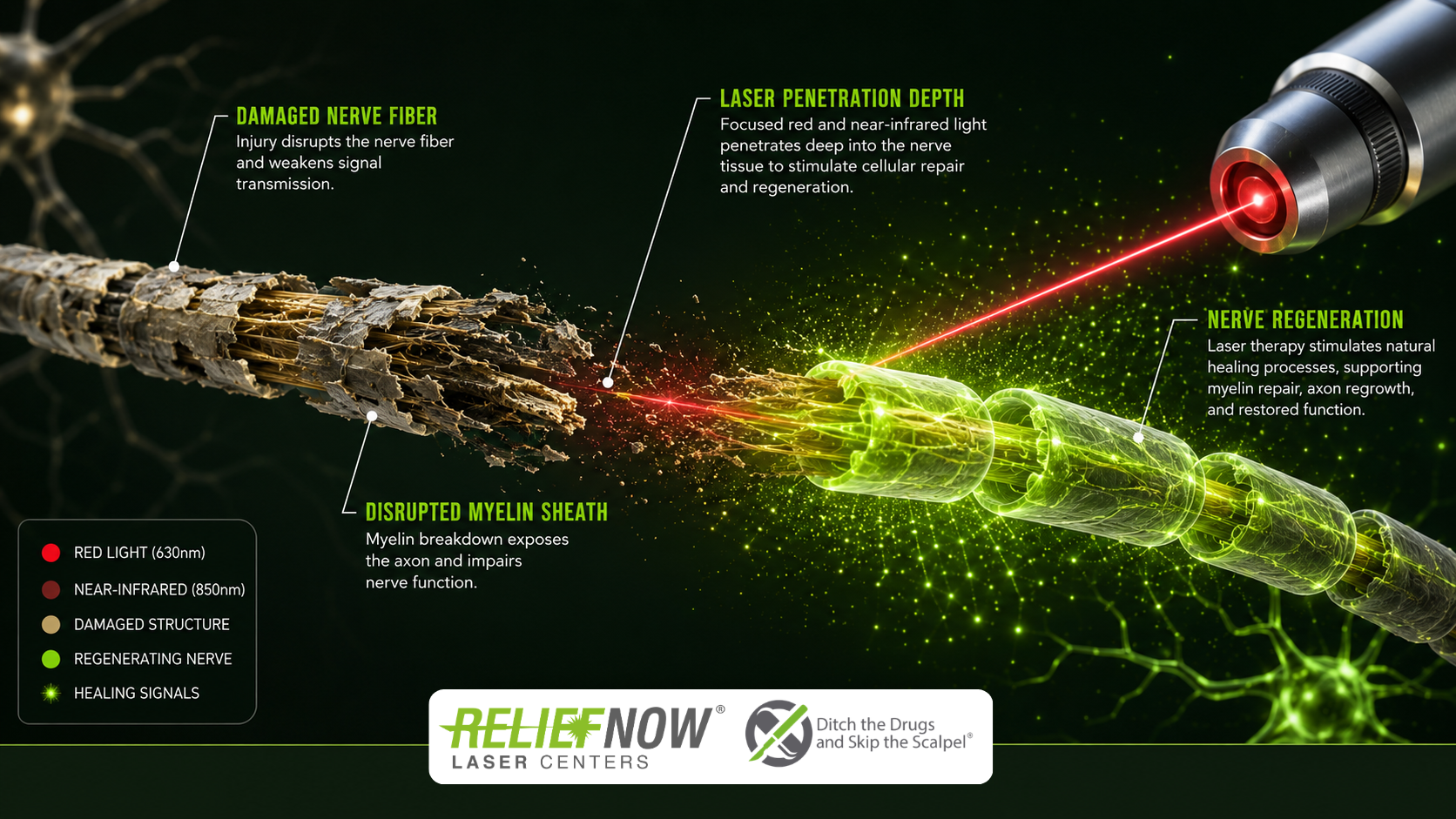
Discover why most neuropathy treatment protocols fail and the clinical framework that reverses peripheral neuropathy without drugs or surgery.
Adding Neuropathy Laser Therapy
to Your Practice: FAQ
Once you understand why Medical Laser Therapy™ works for peripheral neuropathy, the next questions are practical: who to treat, how to measure results, how the program runs, and what the revenue looks like. These answers are drawn from ReliefNow® member clinic experience across a 57-location national network.
The highest-response profiles are diabetic peripheral neuropathy (DPN) patients actively managing blood glucose, idiopathic sensorimotor neuropathy, chemotherapy-induced peripheral neuropathy (CIPN) post-treatment, and post-surgical or trauma-related nerve injury with remaining recovery potential. Patients presenting primarily with sensory symptoms — burning, tingling, numbness — rather than advanced motor deficits respond most consistently. Duration is a key filter: neuropathy under five years typically shows faster, more significant improvement. Practically, your best candidates are already sitting in your waiting room: patients on gabapentin or duloxetine who report inadequate relief are both highly motivated and among the most likely to demonstrate meaningful functional gains.
Outcome documentation is one of the most clinically and commercially important parts of a neuropathy program. ReliefNow® member clinics use a standardized intake and reassessment protocol built around validated tools: the Numeric Pain Rating Scale (NPRS), the Michigan Neuropathy Screening Instrument (MNSI), functional balance assessments, and patient-reported quality-of-life measures. Reassessment at defined protocol milestones (mid-program and completion) generates a before/after outcomes record at the individual patient level. That documented record is the foundation for referral relationships with neurologists, endocrinologists, and podiatrists — and it differentiates your neuropathy program from practices that treat without measuring.
A standard Medical Laser Therapy™ neuropathy protocol runs 12–20 sessions over 4–6 weeks, with individual sessions lasting 10–15 minutes. Treatment is applied directly to the affected extremities using a high-powered Class IV laser at therapeutic dosing levels calibrated to the patient's neuropathy type and severity. Because sessions are short and do not require physician presence — once your staff holds AiMLA certification — the program runs in a dedicated treatment room parallel to your existing schedule. Patients are sold a bundled treatment package at program start, creating predictable revenue with no per-visit billing complexity.
No. The ReliefNow® model is structured as a practice-within-a-practice: the laser runs in a separate treatment room operated by AiMLA-certified staff, entirely independent of your adjustment bay or primary exam schedule. Your existing patient flow is untouched. Most member clinics describe the neuropathy program as a second revenue engine running from space that was previously idle between appointments. The 10–15 minute session format is specifically designed so that a modest patient volume — 6–10 neuropathy patients per day — produces substantial incremental revenue without creating scheduling pressure on your core practice.
Staff must hold AiMLA certification (Academy of Integrative Medicine and Laser Applications) — the recognized clinical certification for Class IV laser therapy administration. AiMLA certification qualifies your team to administer sessions independently, without requiring physician presence for each treatment. ReliefNow® Laser Centers provides AiMLA training as part of the licensing program, meaning your staff is certified and operationally ready before your first neuropathy patient is seen. DCs and their clinical staff typically find the certification process faster than expected: existing knowledge of nerve anatomy, pain pathology, and patient case selection translates directly into the laser therapy curriculum.
The neuropathy program is structured entirely as private-pay (cash): no insurance billing, no claim denials, no reimbursement lag. Patients purchase a bundled treatment package at program start, producing upfront collections. ReliefNow® member clinics report neuropathy programs adding $35,000 to over $100,000 in additional monthly private-pay revenue, depending on patient volume and market. Because collections are immediate and independent of payer mix, the program creates a predictable revenue line that buffers against reimbursement changes in your core insurance-dependent services. Results vary based on market, case mix, and implementation effort.
Purchasing a laser gives you a device. The ReliefNow® licensing program gives you a complete neuropathy practice operating model: evidence-based treatment protocols, AiMLA staff certification training, a proven patient acquisition system, brand identity under the ReliefNow® name, and ongoing support from a 57-location national network. The program is specifically engineered for practices that want to run a neuropathy center profitably from day one — not spend 6–12 months building clinical infrastructure, marketing systems, and intake processes from scratch. There are no franchise fees. Practices operate as authorized ReliefNow® Laser Centers under a licensing arrangement, retaining full ownership of their patient relationships and practice revenue.
Ready to add a cash-pay revenue center to your practice? Drug-free · Non-invasive · No franchise fees · 57-location national network