
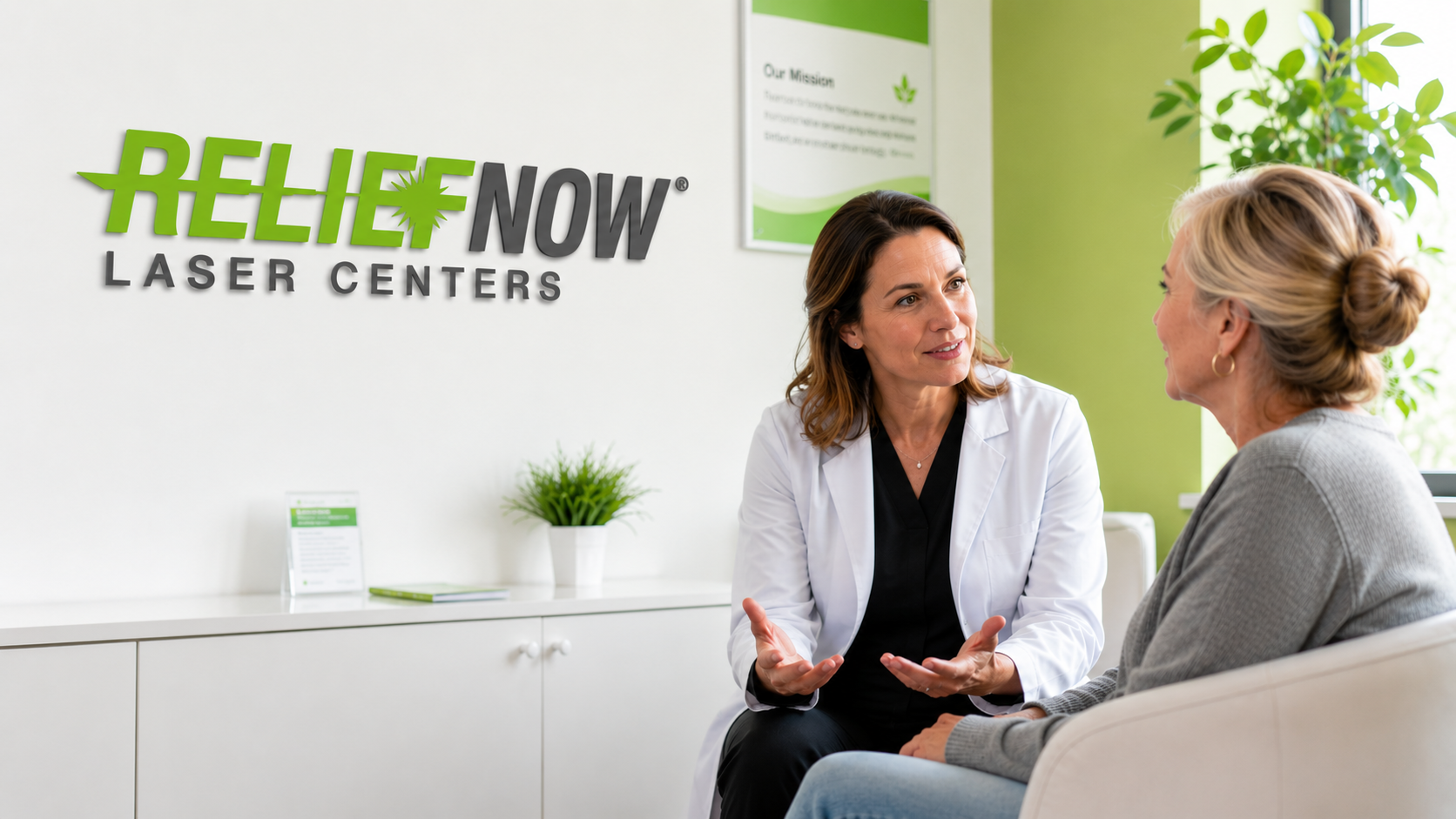
The neuropathy patient sitting across from you has almost certainly been disappointed before. They've taken the gabapentin. They've tried the B12 supplements. Maybe they've done physical therapy, acupuncture, or compression socks. Some of them have lived with the burning, the numbness, and the sleep disruption for so long that they've stopped expecting a real answer and started just looking for someone who won't waste their time.
That's the patient you're talking to. And how you open that conversation determines everything that comes after it.
Why the Standard Approach Fails
Most practitioners default to leading with the technology: "We use a high-power Medical Laser Therapy™ device that..." and then they explain photobiomodulation and ATP production and mitochondrial response. It's accurate. It's important. And for the average neuropathy patient who has already been let down by medicine, it sounds exactly like every other pitch they've heard.
The problem isn't the information. The problem is the sequence.
When a patient has tried multiple treatments without lasting relief, their primary objection isn't "I don't understand how this works." It's "I don't believe this will work for me specifically." Those are completely different problems, and they require completely different conversations.
Start With What They've Already Tried
The most disarming thing you can do in the first three minutes is demonstrate that you understand their history — not in a generic way, but specifically.
Ask them to walk you through every treatment they've tried. Then ask: "What did that do for you?" Not "Did it help?" but "What did it do for you?" The distinction matters. The first question invites a yes or no. The second invites them to explain, in their own words, exactly how each treatment fell short.
This accomplishes two things. First, it gives you clinical information you need. Second — and more importantly — it signals to the patient that you're interested in understanding their experience, not just selling them a protocol.
By the time they've finished, they've already told you exactly what they need to hear from you.
The Mechanism Conversation: Timing and Language
Once you understand what they've tried, you can explain why Medical Laser Therapy™ is different in a way that actually lands — because you can tie it directly to why those other treatments didn't hold.
For most neuropathy patients who have failed medication management, the explanation goes something like this:
"The medications you were taking work by changing how your brain perceives the pain signal — they mask it. They don't change anything at the nerve level, which is why the moment you taper off, the symptoms return. What we're doing is fundamentally different. We're delivering photonic energy directly to the nerve tissue — not to suppress the signal, but to change the environment the nerve is living in. Reducing inflammation along the nerve sheath, restoring local circulation, and giving the nerve cell the energy it needs to repair. The goal isn't to manage your neuropathy. It's to change the tissue."
That explanation works because it doesn't just describe the treatment — it explains why it's different from what failed before. Patients can follow it, and it gives them something to hold onto when they're deciding whether to commit to a protocol.
Setting Expectations That Drive Completion
Protocol completion is the single biggest variable in neuropathy outcomes. Patients who complete a full 12-session Medical Laser Therapy™ program see dramatically better results than those who stop after four or five sessions because they weren't sure if it was "working."
Expectation-setting at the first visit is the best tool you have for protecting completion rates.
Be direct about the timeline: "Most of our patients start noticing changes somewhere between session four and session eight. A few notice something earlier. Some don't notice meaningful change until the back half of the program. That variation is normal — it reflects differences in how long the nerve damage has been present and how well-vascularized the tissue is. What I can tell you is that patients who complete the full program see the best outcomes, and that's what we're designing this for."
Tell them what changes to pay attention to: sleep quality often improves before numbness resolves. The burning may shift before the tingling does. Encourage them to notice anything that changes — not just the primary symptom — because early wins in unexpected places build the trust that carries patients through to completion.
The Patient Who Has Truly Given Up
Some neuropathy patients arrive not just skeptical but defeated. They're not shopping around anymore. They found you because someone told them to come, or because they've been in enough pain long enough that they're willing to try one more thing.
For those patients, the conversation isn't about explaining a protocol. It's about being the first person in a long time who takes their experience seriously and gives them a reason to hope.
Don't oversell outcomes. Don't promise things you can't guarantee. But you can say this honestly: "I've seen patients with your history get their lives back with this treatment. I can't promise you an outcome, but I can promise you that if it's going to help you, this is what has the best chance of doing it. And I want to try."
That's often enough.
A Note on Staff Training
The neuropathy conversation doesn't happen only with the physician. Front desk staff who handle incoming calls, therapy coordinators who run the first consultation, and clinical assistants who see the patient at every session — all of them are part of the conversation.
Consistency in language matters. When the patient hears the same framing from the doctor, the coordinator, and the person running their session, it reinforces their confidence in the program. When they hear inconsistency, it creates doubt.
Train your team on the language. Walk them through the common objections. Make sure everyone in the practice can answer "how is this different from what I've already tried?" without defaulting to technical jargon.
That consistency is one of the most underrated drivers of neuropathy program completion rates — and completion is what drives outcomes.
Ready to Build Your Neuropathy Program?
If you're developing or expanding a neuropathy service line at your practice, the ReliefNow® Neuropathy Resource Center has protocols, patient education systems, and documentation templates designed for practices that are serious about outcomes.