
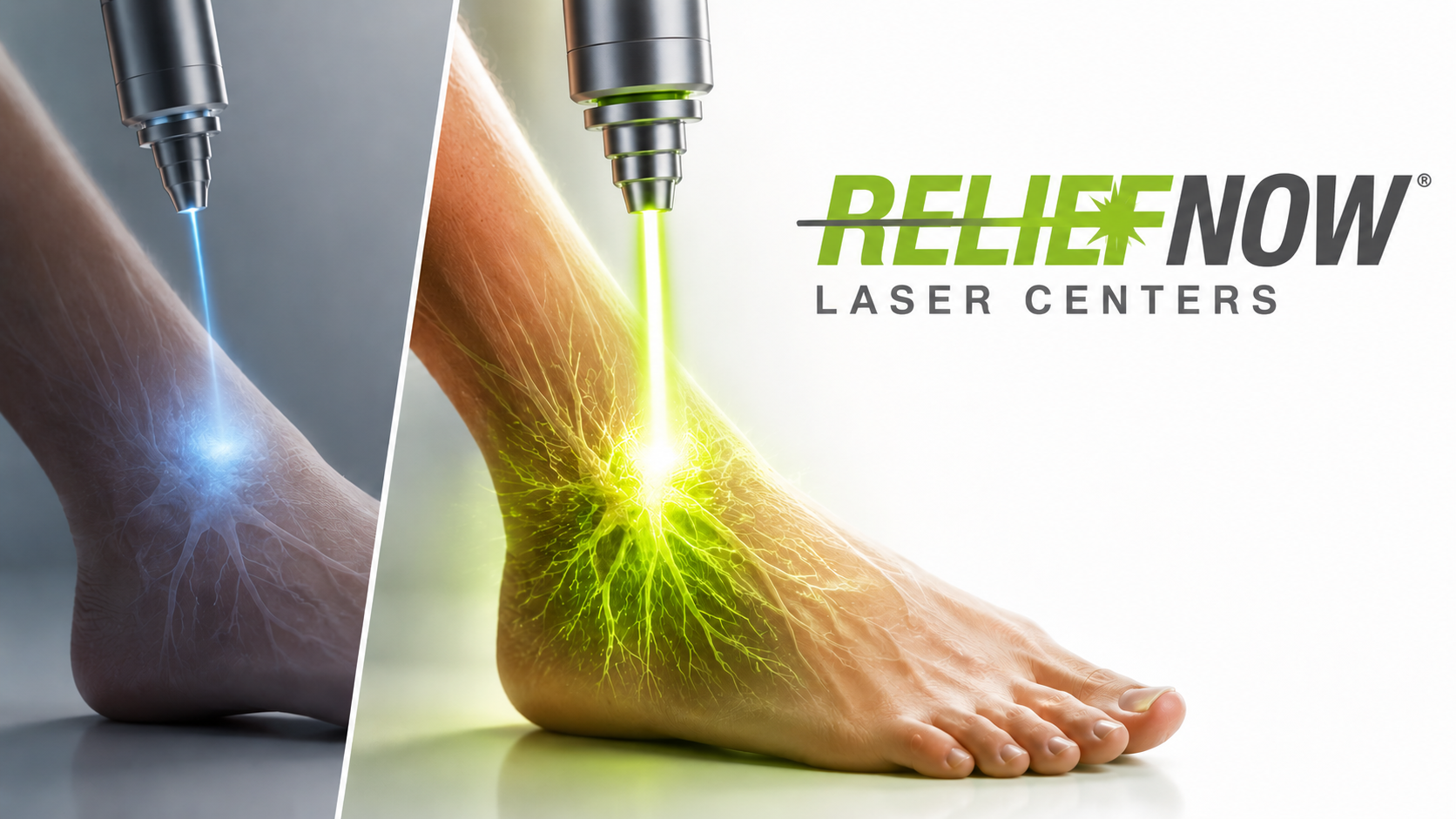
Not all laser therapy is the same. High-power Laser Therapy delivers photons deep enough to reach compromised peripheral nerve tissue — where neuropathy actually lives. Low-level laser therapy does not. That single difference in photon penetration depth is the reason outcomes between the two approaches are so dramatically different for neuropathy patients.
What Is Neuropathy and Why Is It So Hard to Treat?
Peripheral neuropathy is damage or dysfunction of the peripheral nerves — the nerves that carry signals between the brain, spinal cord, and the rest of the body. For most patients, it shows up as burning, stinging, or shooting pain in the feet and legs, numbness, tingling, and a general loss of sensation that makes everyday activities difficult.
What makes neuropathy so challenging to treat is its location. The nerve tissue that needs to be reached sits deep in the lower extremities, often surrounded by layers of muscle, fat, and connective tissue. Most conventional treatments work on symptoms rather than the underlying nerve dysfunction. Medications can dull the pain signal, but they do not address the nerve itself. That is why so many neuropathy patients spend years cycling through treatments without real resolution.
High-power Laser Therapy takes a different approach. Rather than masking the symptom, it delivers therapeutic light energy directly to the affected nerve tissue to stimulate the biological processes that allow nerves to heal and function again.
Why Low-Level Laser Falls Short for Neuropathy
Low-level laser therapy (LLLT), sometimes called cold laser, has been used in clinical settings for decades. It has genuine applications in wound healing and superficial soft tissue conditions. But for peripheral neuropathy, it consistently underperforms — and the reason is physics, not opinion.
Low-level laser devices operate at power outputs that are insufficient to drive meaningful photon delivery at depth. The photons they produce are absorbed and scattered before they can penetrate to the nerve trunk level in the lower extremities of most neuropathy patients. The result is surface-level stimulation that does not reach the tissue that needs to change.
This is why patients who have tried low-level laser for neuropathy often report little to no improvement. It is not that laser therapy does not work for neuropathy. It is that underpowered laser therapy cannot get the photons where they need to go.
How High-Power Laser Therapy Is Different
High-power Laser Therapy operates at therapeutic power densities that low-level devices cannot match. That difference in power means a fundamentally different clinical outcome for neuropathy patients.
At the right power and wavelength, photons penetrate through the superficial tissue layers and reach the depth of the peripheral nerve trunk. Once there, three key biological processes are triggered:
-
Mitochondrial ATP Production
Photobiomodulation stimulates mitochondria within nerve cells to produce more adenosine triphosphate (ATP) — the energy currency the cell uses to repair itself and resume normal function. Nerves that have been metabolically compromised begin to recover the energy they need to signal properly.
-
Reduction of Neuroinflammation
Chronic inflammation along the nerve sheath is a primary driver of neuropathic pain. High-power laser therapy reduces local inflammatory mediators along the nerve pathway, which directly reduces the pain signal and allows the nerve environment to support healing rather than sustaining damage.
-
Improved Local Circulation
For patients with diabetic peripheral neuropathy, vascular compromise is a significant contributor to nerve dysfunction. Increased local circulation following a laser treatment session delivers more oxygen and nutrients to nerve tissue that has been starved of both. This vascular response is one reason diabetic neuropathy patients often respond particularly well to high-power Laser Therapy.
Protocol Consistency Is Just as Important as Power
The power of the device matters. But power alone does not produce outcomes. Protocol consistency is equally critical.
Practices achieving the strongest neuropathy results are delivering structured programs — typically 12 or more sessions — with standardized assessments at the start of treatment and at each subsequent visit. Pre- and post-session tracking of pain scores and functional measures gives both the clinician and the patient objective data on progress.
This matters for two reasons. First, it keeps the clinical team accountable to a repeatable, results-oriented process. Second, it keeps patients engaged. When a patient can see their VAS pain score dropping from an 8 to a 5 to a 3 over a series of sessions, they stay committed to completing the program. Completion drives outcomes. Patients who drop out early rarely experience the full benefit of the protocol.
The combination of high-power photon delivery and a structured, monitored program is what separates practices that get good neuropathy results from practices that become the go-to neuropathy destination in their market.
What Patients Are Asking About Laser Therapy for Neuropathy
Does laser therapy actually work for neuropathy?
High-power Laser Therapy has produced meaningful clinical results for peripheral neuropathy patients, including those with diabetic, idiopathic, and chemotherapy-induced neuropathy. The key is ensuring the device delivers sufficient power density to reach the nerve tissue at depth, and that the treatment is delivered as part of a structured, complete program.
How is high-power laser different from cold laser for neuropathy?
Cold laser (low-level laser) operates at power levels too low to penetrate to the nerve trunk in the lower extremities. High-power Laser Therapy delivers photons at therapeutic depth, triggering mitochondrial repair, reducing inflammation, and improving local circulation — all of which directly address the underlying nerve dysfunction, not just the symptom.
How many laser treatments does it take for neuropathy?
Most structured neuropathy programs are 12 or more sessions delivered over several weeks. Results vary by patient, but the most important factor is completing the full program. Patients who finish their treatment consistently report better outcomes than those who stop early.
Is laser therapy for neuropathy covered by insurance?
Laser therapy for neuropathy is typically offered as a private-pay service. Many patients find that the investment compares favorably to years of ongoing medication costs, specialist visits, and other treatments that did not resolve the condition.
Can neuropathy be reversed with laser therapy?
Many patients experience significant reduction in pain, numbness, and functional limitation after completing a high-power laser program. While individual results vary, patients who complete a full structured protocol frequently report life-changing improvements in their ability to walk, sleep, and carry out daily activities without pain.
The Bottom Line
For neuropathy patients who have tried everything and been told to simply manage their condition, high-power Laser Therapy offers something different: a treatment that reaches the nerve tissue itself, triggers genuine biological repair, and delivers results that accumulate with each session of a structured program.
Not all laser therapy is created equal. Power density, photon depth, and protocol structure are what separate a life-changing outcome from another disappointing attempt.
Ready to Learn More About Building a Neuropathy Program With Proven Results?
Visit the Resource Center at TheLaserMasters.com for full protocol parameters, training documentation, and clinical resources for your practice.